A thermometer that reads two degrees high is not a thermometer. It is a suggestion.
1. The probe is the weak point
The thermocouple or thermistor sits at the tip of a stainless tube that gets stabbed, bent and washed. Water ingress at the cable junction is the most common failure: the reading starts drifting after a few weeks, usually low. An IPX7 probe with a sealed junction survives; a “hand wash only” probe eventually does not.
2. The cold end matters
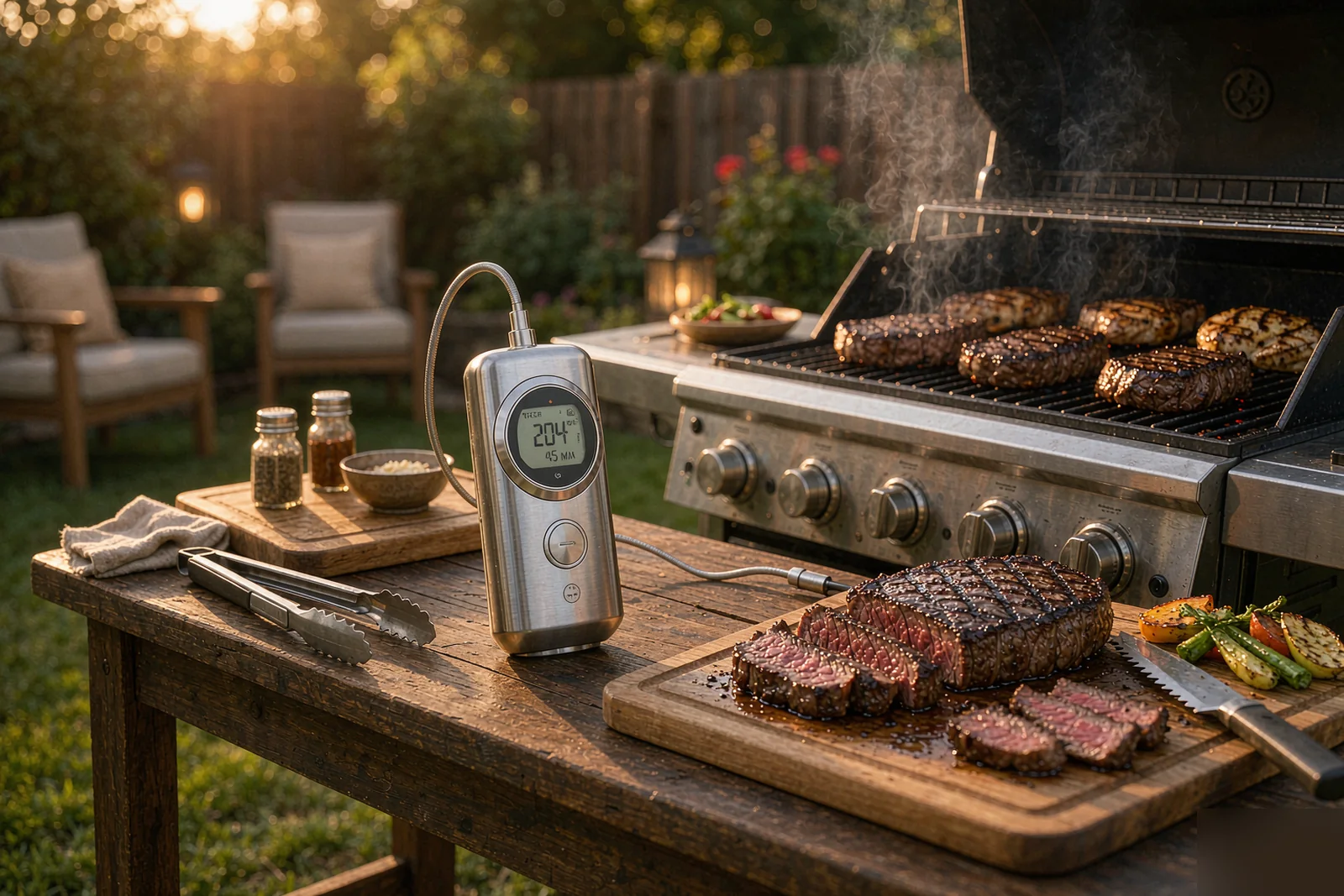
Thermocouples measure a voltage difference between the hot tip and the plug. If the plug sits near a hot grill lid, the reference junction heats up and the reading shifts. Keep the transmitter out of radiant heat — magnetic base on the side shelf, not on the lid above the vent.
3. Ice water is the only test you need
Fill a glass with crushed ice and a little water, stir, and insert the probe without touching the sides. It should read 32°F ±1°F. If it reads 35°F, everything you cook will be 3°F over. Repeat the test every few months; it takes two minutes.
What accuracy actually costs
±1°F across the cooking range is achievable at a reasonable price. What you pay more for at the top end is logging, build material and calibration certificates — not basic accuracy. For home cooking, ±1°F is the number that matters.
The rest is technique
- Insert the probe to the thickest part, avoiding bone and fat.
- Rest meat for 5–10 minutes; carryover cooking adds 3–8°F.
- Pull poultry at 160°F and let it carry to 165°F.
- Clean and dry the probe before storing — moisture kills more probes than heat.