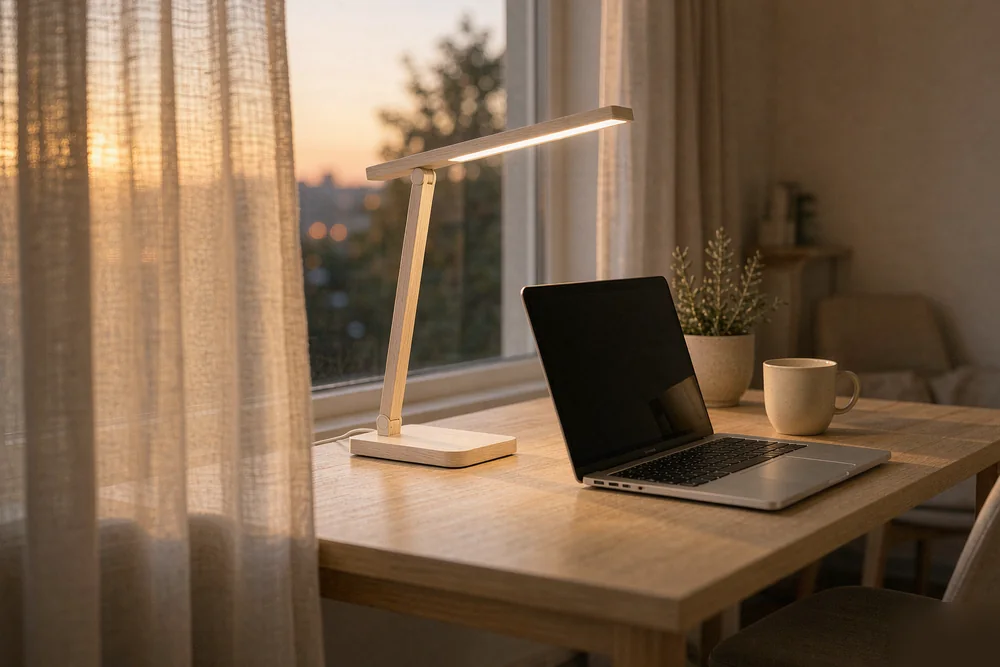
Ambient lighting is the fastest way to make a rental feel like a home. It is also the fastest way to make a living room look like a gaming tournament.
Layer, don’t flood
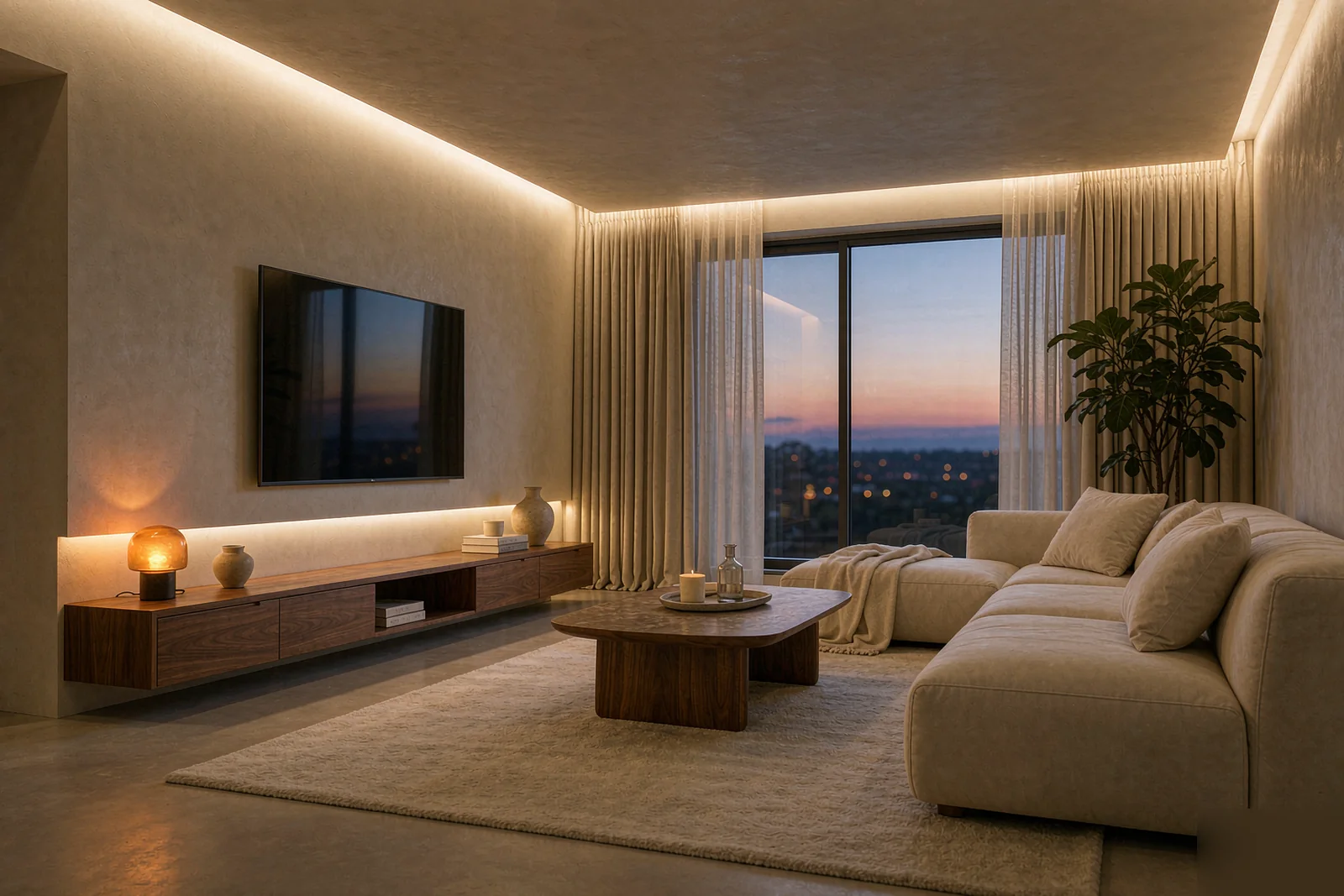
Good rooms have three layers: overhead general light, task light where you work, and ambient light at the edges. The mistake is using colour as the general light. Keep the ceiling neutral and put colour low and to the side — behind a TV, under a shelf, along a skirting board.
The 10% rule
Ambient light should be roughly 10% as bright as the room’s main light. If your ceiling light is 800 lumens, aim for 60–100 lumens of ambient glow. That is why a 120-lumen table lamp feels right in a corner and wrong in the middle of the room.
Pick two colours, not sixteen
Choose one warm white (2700K) and one accent. Amber and rose read as sunset; teal and violet read as cinema. Anything else tends to look like a notification. If a strip has a “scene” mode, use it — someone already did the colour work.
Hide the source
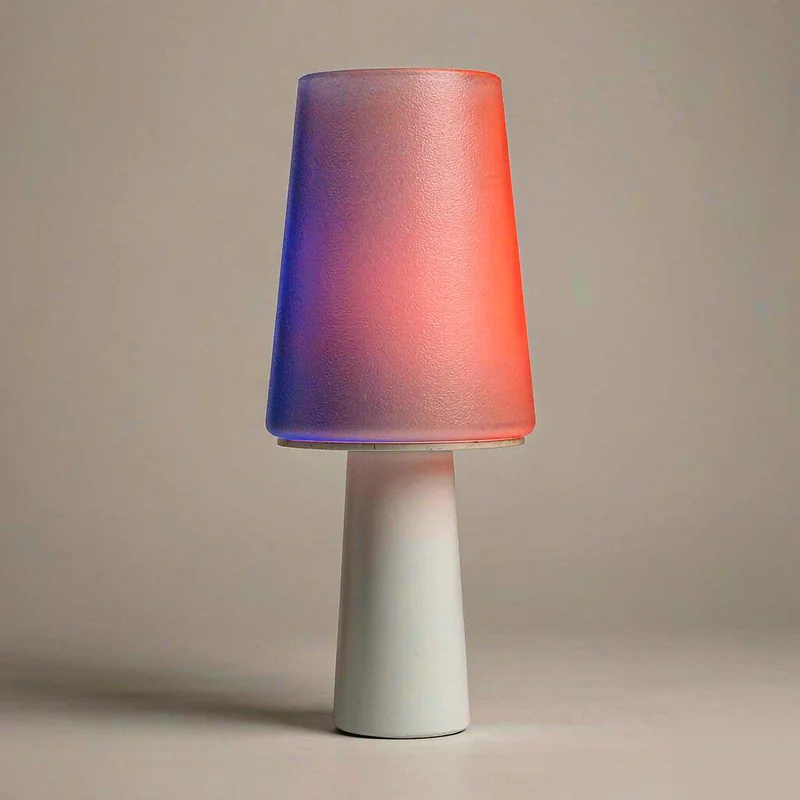
You should see the glow, not the LEDs. A strip behind a TV console, a lamp with a frosted diffuser, a projector aimed at a wall — all of these work because the source is indirect. Exposed diodes at eye level are the single biggest tell of a cheap setup.
Where to put it
- Behind the TV: reduces contrast against a dark wall and looks intentional.
- Under a kitchen cabinet: the most useful ambient light in any home.
- Behind a headboard: reading light without a bedside lamp.
- Along a hallway skirting board: a night path that does not wake anyone.
The test
Turn the ambient light on, then leave the room for ten minutes. When you come back, you should notice the room feels warmer — not that the light is on. That is the whole goal.